

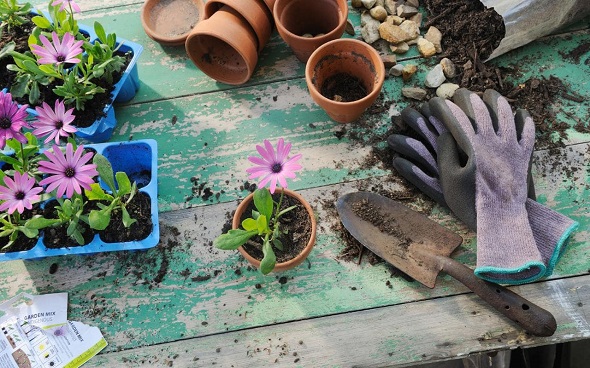
Every gardener knows that a thriving backyard starts with three fundamentals: good soil, adequate sunlight, and consistent watering. Nature provides those ingredients, but turning them into a beautiful, productive garden is a different story. That’s where having the right gardening tools makes all the difference.
The right equipment saves you time, protects your plants, and makes even the hardest work feel manageable. The wrong tools, on the other hand, can damage roots, bruise stems, and turn an enjoyable hobby into an exhausting chore.
If you’re setting up a new garden or replacing worn-out equipment, this guide walks you through the essential gardening tools you need — and what to look for when choosing each one.
Why Quality Gardening Tools Matter
It’s tempting to save money by grabbing the cheapest tools at the hardware store, but poor quality gardening equipment costs more in the long run. Flimsy handles snap under pressure, blunt blades tear plant tissue rather than cutting it cleanly, and poorly balanced tools lead to fatigue and even injury.
When shopping for gardening tools, look for forged steel heads rather than stamped metal, handles made from solid hardwood or fibreglass, and ergonomic grips that reduce strain on your wrists and hands. A good set of gardening tools, properly maintained, can last decades.
Pruning Shears — Your Most-Used Tool
If there is one gardening tool you should invest in above all others, it’s a quality pair of pruning shears. You will reach for them almost every time you step outside. Pruning shears come in two main types: bypass pruners, which cut with a scissor-like action and are ideal for live stems and green growth, and anvil pruners, which crush the stem against a flat surface and work best on deadwood.
For most backyard gardeners, bypass pruners are the better choice, as they produce a cleaner cut and cause less damage to living plant tissue. Look for stainless steel blades and a comfortable, lockable grip. The Felco F-2 is widely regarded as the professional standard and holds its edge exceptionally well with regular sharpening.
Check out the Amazon range of -> bypass pruning shears
Spade and Digging Fork — The Foundation of Any Garden
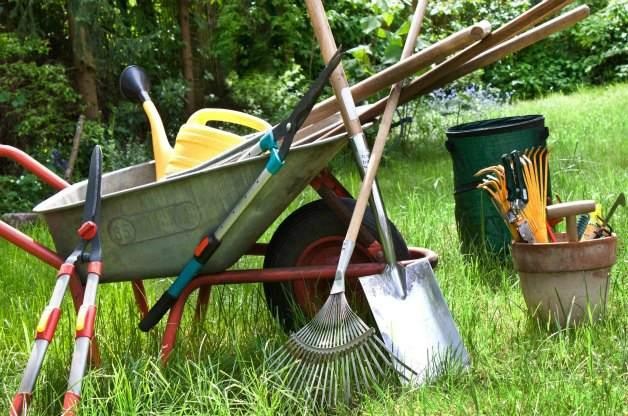
A solid spade is essential for breaking new ground, edging beds, and transplanting shrubs and perennials. Choose one with a D-shaped handle for better control in tight spaces, or a long straight handle if you prefer working while standing upright.
The blade should be forged steel, not pressed, and the join between blade and handle should feel solid and tight. This junction is where cheap spades fail first.
A digging fork (or spading fork) is just as valuable and often overlooked. Where a spade slices through soil, a fork aerates it, loosening compacted earth without breaking up the structure that roots need.
It’s also the best tool for dividing perennials, lifting root vegetables, and working compost through garden beds. If you only buy two long-handled tools, make them a spade and a fork.
Check out the Amazon range of -> garden spade and fork
Hand Trowel — Small but Indispensable
The hand trowel is the workhorse of close-up garden work. You’ll use it for planting seedlings, bulbs, and small perennials, for weeding in tight spots, and for scooping potting mix into containers.
A good hand trowel has a polished aluminum or stainless steel head that slides through soil easily without rusting, and a rubberised grip that won’t slip even when your hands are muddy. Look for one with depth markings etched into the blade. These make planting bulbs at the correct depth much easier and take the guesswork out of spacing.
Check out the Amazon range of -> hand trowel
Garden Hoe and Cultivator — Keeping Weeds Under Control
Weeds are the enemy of a productive garden, and the hoe is your primary weapon against them. A standard garden hoe is used for breaking up surface soil and cutting down weeds at soil level. While a cultivator, with its claw-like tines loosens the top few inches of soil around established plants, improving drainage and disrupting weed seedlings before they get established.
Modern cultivators often feature patented tine designs that make short work of compacted clay soil without requiring significant effort. For larger gardens, a wheeled cultivator or a powered rotary tiller can save hours of work each season.
The collinear hoe deserves a special mention for vegetable gardeners. It’s designed for working in a standing position with the blade angled correctly, which means far less back strain than traditional hoes. Gardening experts consistently recommend it for precision weeding between closely planted rows.
Check out the Amazon range of -> garden hoe/cultivator
Mattock — The Underrated Multi-Tasker
Many gardeners overlook the mattock, but once you’ve used one you’ll wonder how you managed without it. A mattock combines the functions of a pick, a hoe, and sometimes an axe in a single tool.
One end features a horizontal blade for chopping and grubbing, while the other may have a vertical blade or pick for breaking up compacted soil and working around established tree roots.
For anyone dealing with heavy clay soil or a garden that hasn’t been worked in years, a mattock will do more in an afternoon than a standard hoe would do in a week.
Loppers and Hedge Shears — For Bigger Branches
When branches grow too thick for pruning shears. Generally anything over half an inch in diameter, loppers are the answer. They work on the same bypass or anvil principle as hand pruners, but the long handles give you the leverage to cut through woody growth that would defeat a smaller tool.
Extendable-handle loppers are particularly useful for reaching into the centre of established shrubs or up into lower tree branches without needing a ladder. Fiskars makes a highly regarded extendable model that handles branches up to two inches thick with minimal effort.
Hedge shears are a different tool designed specifically for trimming hedges and shaped topiary. Unlike loppers, they cut with a long, scissor-action blade rather than at a single point.
If you have formal hedging in your backyard, a quality pair of hedge shears is worth having. Fiskars Power Lever shears are frequently praised for their ability to stay sharp through extended cutting sessions.
Check out the Amazon range -> loppers and hedge shears
Rake — Leaf Collection and Soil Preparation
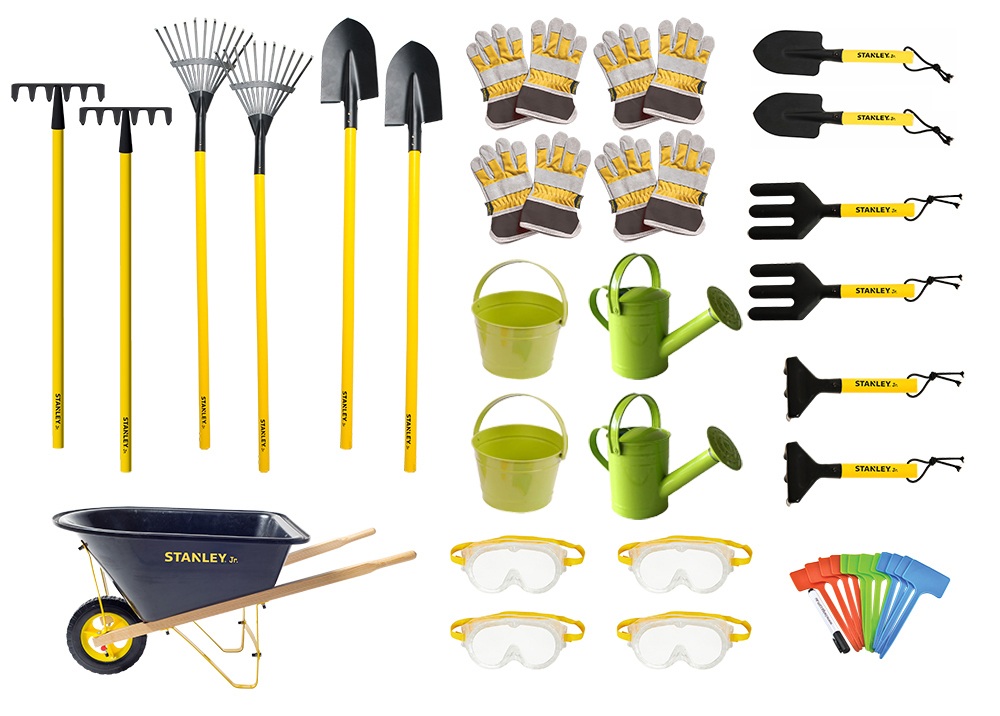
Most gardeners need two types of rake. A fan rake (also called a leaf rake) has flexible, widely spaced tines designed for gathering fallen leaves, grass clippings, and garden debris from lawns without damaging the turf.
A garden rake, by contrast, has short, rigid metal tines and is used for leveling soil, breaking up clods after digging, and working in amendments like compost or fertiliser. If you’re buying just one, the garden rake is more versatile for active planting and bed preparation, while the fan rake becomes essential in autumn.
Leaf Sweeper — A Faster Alternative for Large Lawns
If you have a sizeable lawn and a lot of deciduous trees, a push-along leaf sweeper can dramatically cut down the time you spend on autumn clean-up. Unlike rakes, which require multiple passes and physically drag debris across the lawn, leaf sweepers use rotating brushes to collect leaves into an onboard bag as you walk.
Many models feature an adjustable height setting to accommodate different grass lengths, with collection bags of 150 to 200 litres that can be emptied in seconds. They’re also quieter and more eco-friendly than petrol or electric leaf blowers.
Lawnmower — Choosing the Right One for Your Yard
The right lawnmower depends almost entirely on the size and shape of your lawn. For small, flat backyards, a push reel mower is an excellent low-maintenance, zero-emissions option that produces a clean cut and requires no fuel or electricity.
For larger, irregular lawns, a powered mower, whether electric, battery-operated, or petrol-driven saves significant time and effort. Battery-powered mowers have improved enormously in recent years and are now a practical choice for most suburban backyards, offering the convenience of cordless use with no emissions and much lower noise than petrol alternatives.
Check out the Amazon range -> lawnmowers or lawn mower accessories
Garden Hose and Watering Equipment
Efficient watering is fundamental to a healthy garden, and the right equipment makes it much easier. A modern expandable hose is lightweight, tangle-resistant, and easy to store compared to traditional rubber hoses.
Pair it with a quality adjustable nozzle, ideally one that transitions from a fine mist for delicate seedlings to a powerful jet for washing down hard surfaces. You’ll have all the watering flexibility you need.
For gardeners with raised beds or container gardens, watering cans with long, narrow spouts allow precise watering right at the base of plants without wetting foliage unnecessarily.
For a more hands-off approach, drip irrigation systems are worth considering. They deliver water directly to plant roots on a timer. Which reduce evaporation, and can significantly lower your water usage over the course of a growing season.
Check out the Amazon range -> garden hose / watering equipment
Garden Gloves — Protect Your Hands
This is one tool many gardeners treat as an afterthought, but a good pair of garden gloves is genuinely important. They protect your hands from thorns, blisters, soil-borne bacteria, and the repeated friction of hand tool use.
Nitrile-coated gloves offer a good combination of grip, dexterity, and protection for most tasks, while heavier leather gloves are worth having for pruning thorny shrubs like roses. Look for gloves with a snug wrist fit that stops soil falling inside. This small detail makes a surprisingly big difference in comfort.
Check out the Amazon range -> garden gloves
Garden Cart or Wheelbarrow — Moving Heavy Loads
Once you start gardening in earnest, you’ll quickly realise how much heavy material needs moving: bags of compost, loads of mulch, pruned branches, harvested vegetables, rocks. A wheelbarrow or garden dump cart is essential for all of it.
Traditional single-wheel wheelbarrows are manoeuvrable in tight spaces and good for tipping loads. While four-wheeled garden carts are more stable and better suited to carrying large, unbalanced loads across flat ground.
Models with pneumatic tyres handle rough terrain much better than solid rubber wheels. Which is worth remembering if your backyard has uneven ground or gravel paths.</p>
Maintaining Your Gardening Tools
Even the best tools won’t last if they’re not cared for. After each use, clean soil off metal blades and heads, as damp soil accelerates rust. Dry tools thoroughly before storing them. Every few months, sharpen cutting blades on pruners, shears, and hoes using a whetstone or sharpening tool.
Sharp blades require far less effort and cause less damage to plants than blunt ones. Rub wooden handles with linseed oil once a season to prevent cracking. Store all the tools in a dry shed or garage rather than leaving them exposed to weather.
Frequently Asked Questions About Gardening Tools
What gardening tools do I need as a complete beginner?
If you’re just starting out, you don’t need to buy everything at once. The six tools that will cover the vast majority of beginner gardening tasks are a hand trowel, a pair of bypass pruning shears, a garden fork, a spade, a garden rake, and a good pair of gloves.
Get quality versions of those six first and add specialist tools like loppers, a cultivator, or a mattock as your garden grows and your specific needs become clearer.
What is the difference between a spade and a shovel?
This is one of the most common points of confusion for new gardeners. A spade has a flat, straight-edged blade designed for cutting into soil, edging garden beds, and transplanting.
A shovel has a curved, scooped blade with a pointed tip, making it better suited for moving loose materials like soil, compost, gravel, and mulch from one place to another. Both are useful, but if you can only buy one, a spade is the more versatile choice for active garden work.
How do I keep my gardening tools in good condition?
The basics are simple but make a big difference over time. After every use, knock the soil off metal blades and wipe them down. Damp soil left on steel is the fastest route to rust. Dry tools completely before storing them, and keep them in a shed or garage rather than leaving them outside.
Every few months, sharpen the blades on your pruners, hoe, and shears using a whetstone or hand file, and rub any wooden handles with linseed oil once a season to stop them drying out and cracking.
How long should quality gardening tools last?
A well-made gardening tool, properly looked after, should last anywhere from 10 to 30 years. And in some cases a lifetime. Forged steel heads, solid hardwood or fibreglass handles, and double-riveted joints are the construction details that separate tools built to last from those that will fail within a season or two.
Brands that offer a lifetime warranty against manufacturer defects are usually a reliable indicator of genuine quality.
Is it worth spending more money on premium gardening tools?
In most cases, yes — particularly for the tools you use most often. Cheap pruning shears go blunt quickly, blunt blades damage plant tissue, and damaged plants are more vulnerable to disease.
A quality pair of bypass pruners like the Felco F-2 costs more upfront. They will outlast five or six budget pairs and make cleaner cuts every time. That said, you don’t need to spend a fortune on everything. Focus your budget on cutting tools and hand tools you’ll use daily, and save money on less critical items like leaf rakes and garden carts.
Building Your Toolkit: Where to Start
If you’re new to gardening or starting from scratch, the priority purchases are:
- a hand trowel
- a pair of bypass pruning shears
- garden fork
- a spade
- a garden rake
- and a quality pair of gloves.
With those six gardening tools, you can handle the vast majority of backyard gardening tasks. From there, add tools as your garden grows and your specific needs become clear.
A mattock if you’re dealing with hard soil, loppers if you have established shrubs, a lawnmower calibrated to your lawn size, and watering equipment suited to your setup.</p>
Investing in well-made gardening tools from reputable brands might feel like a significant outlay upfront. Quality tools perform better, last longer, and make gardening genuinely more enjoyable.
Your backyard deserves the right equipment, and so do you.

